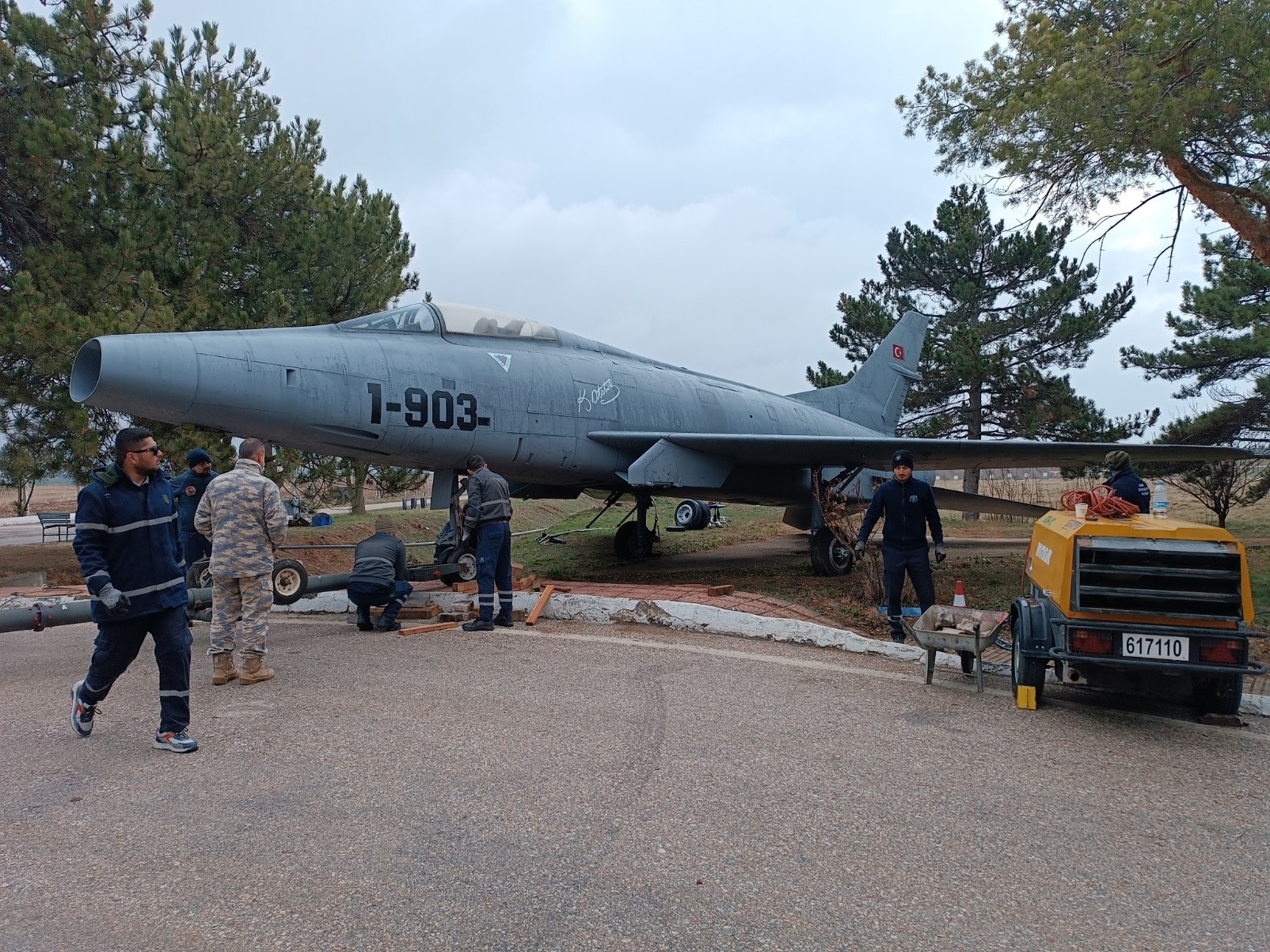
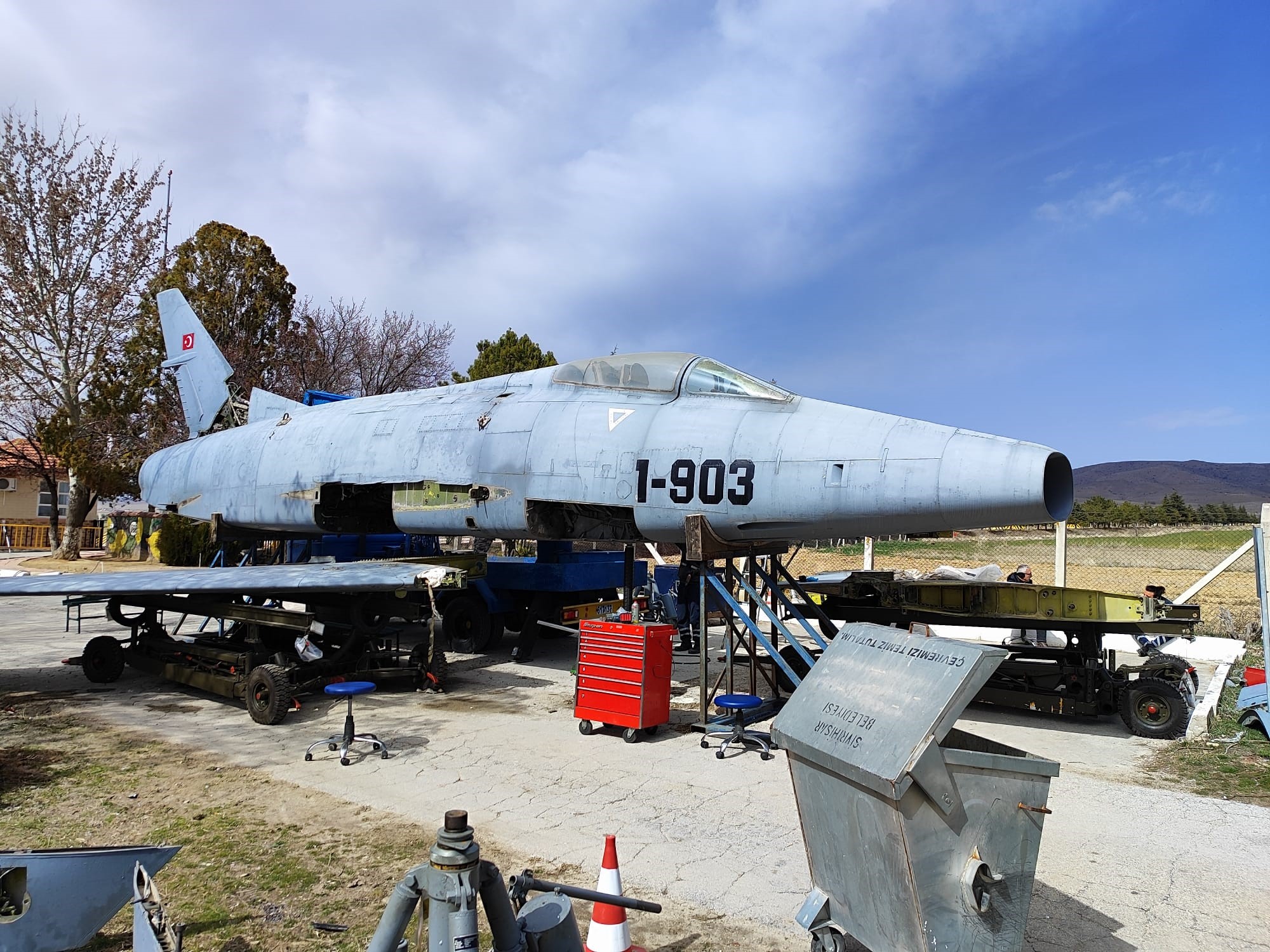
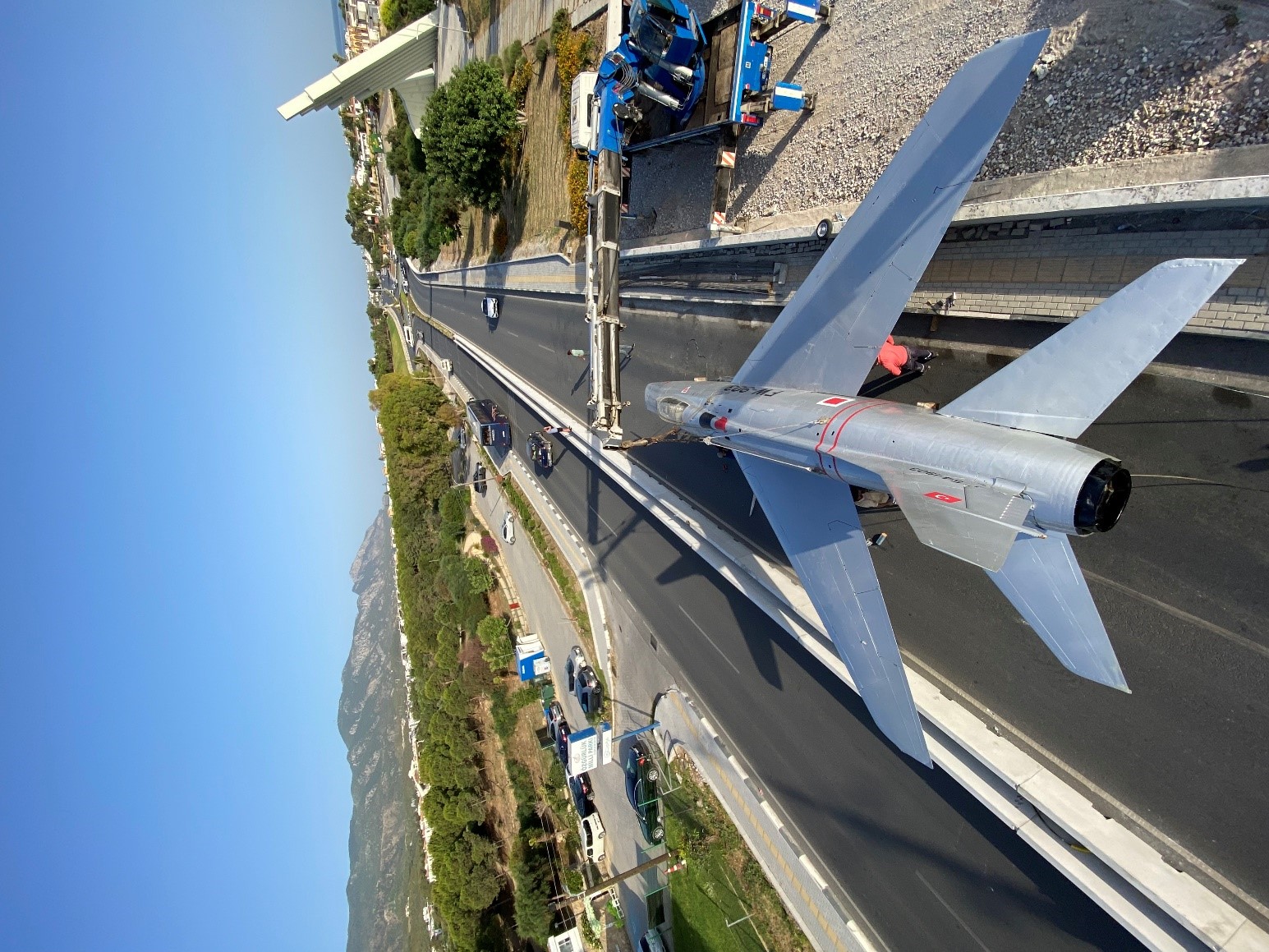
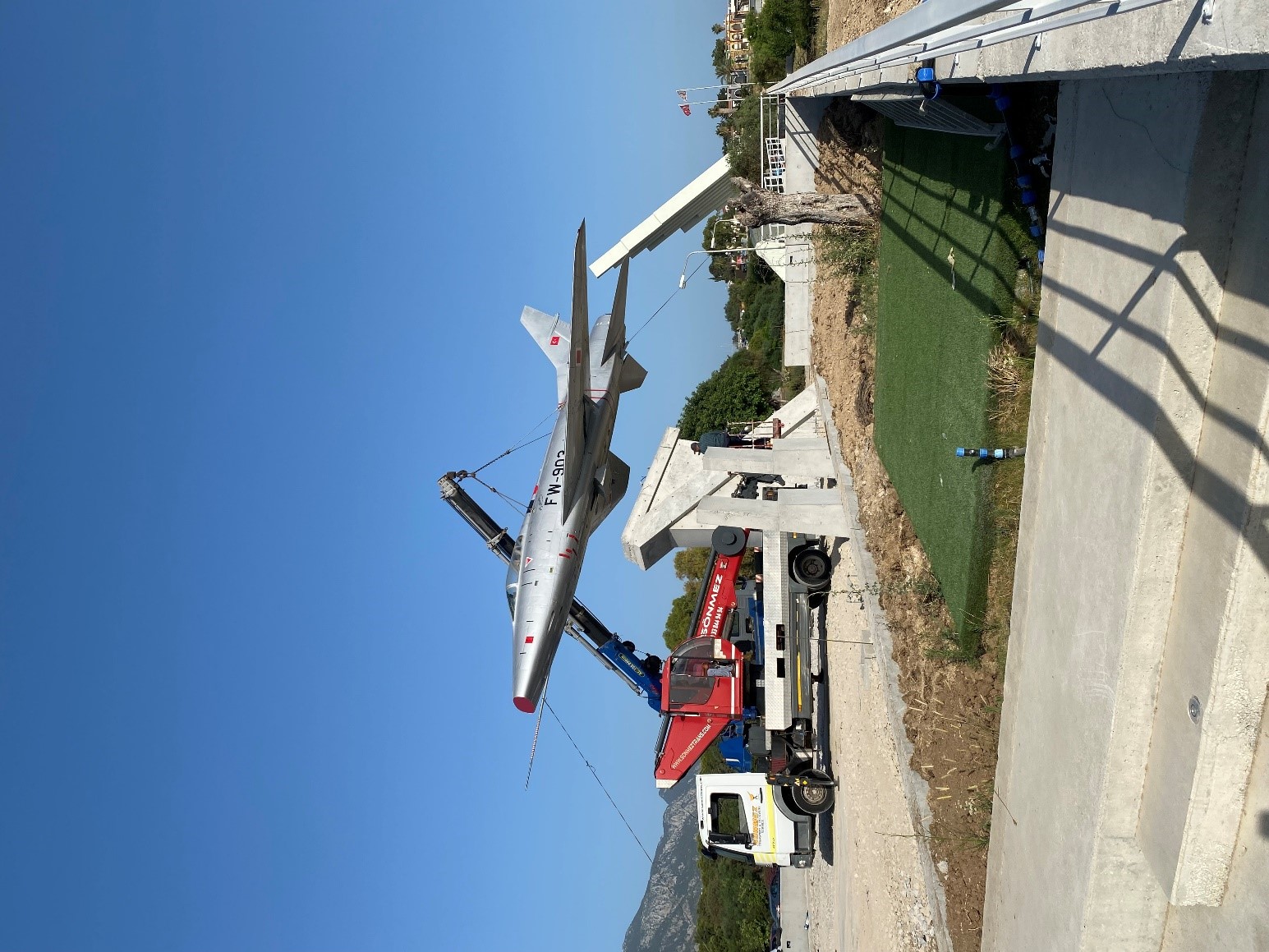
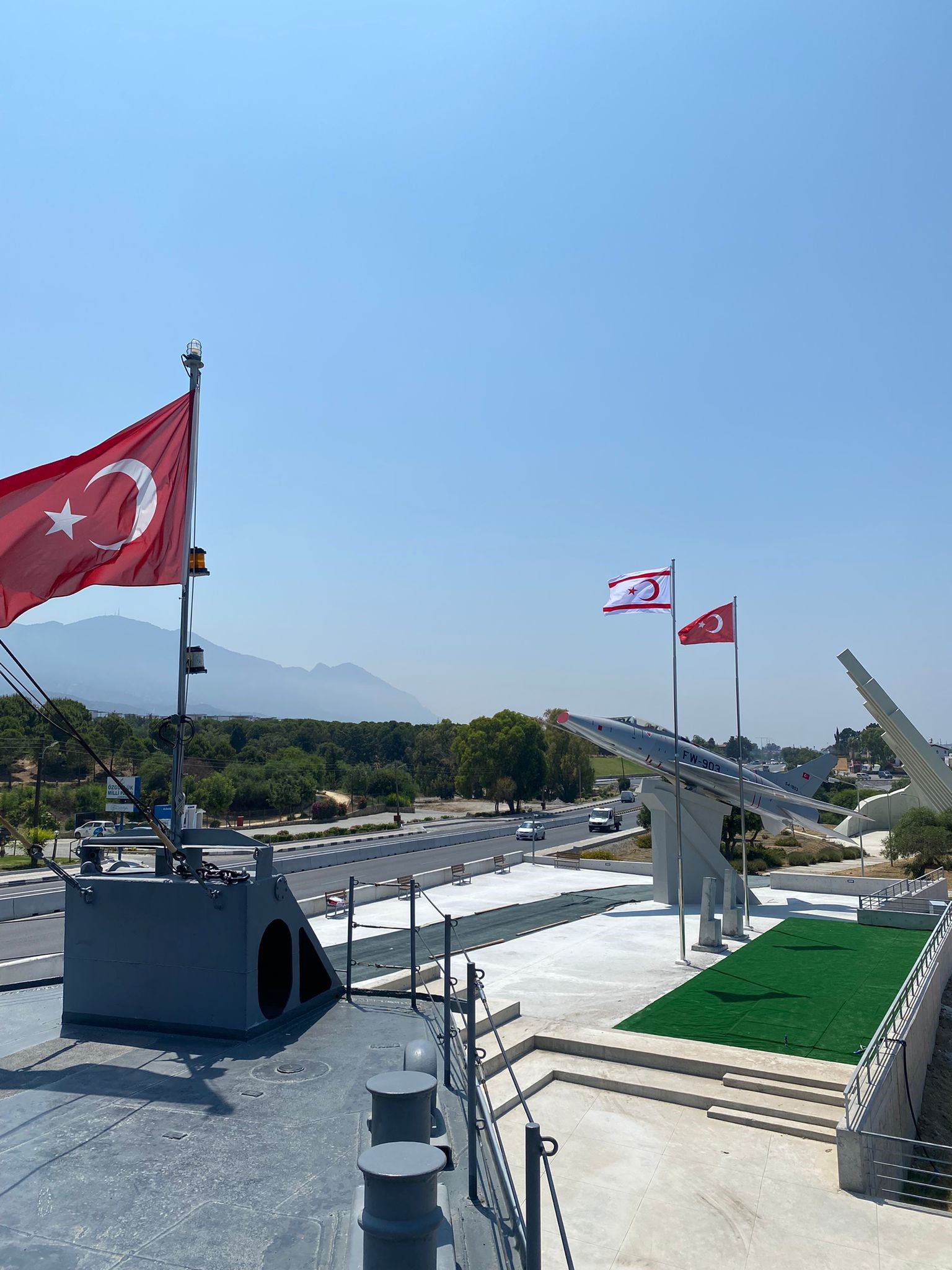
F-100 SUPER SABRE
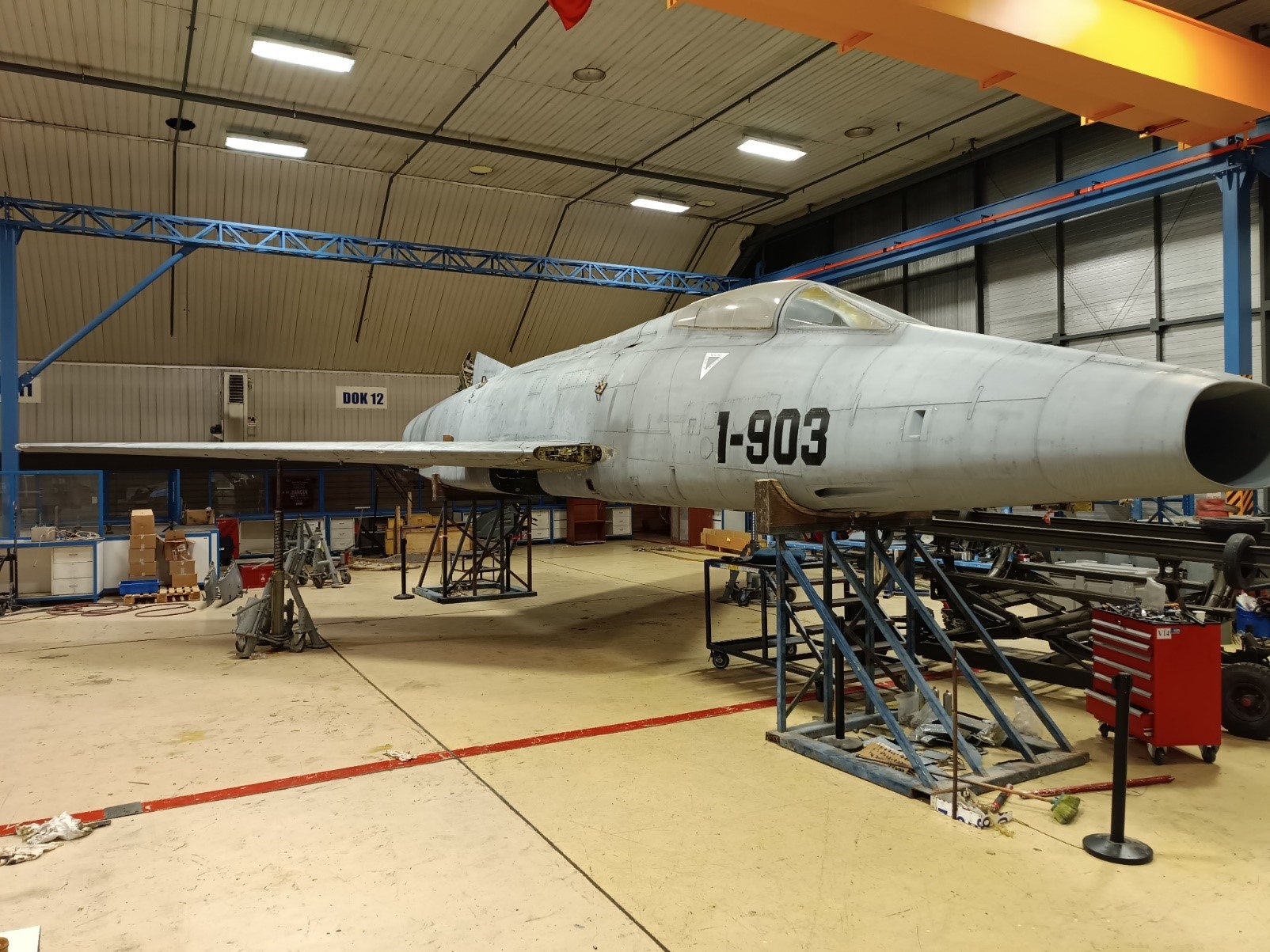
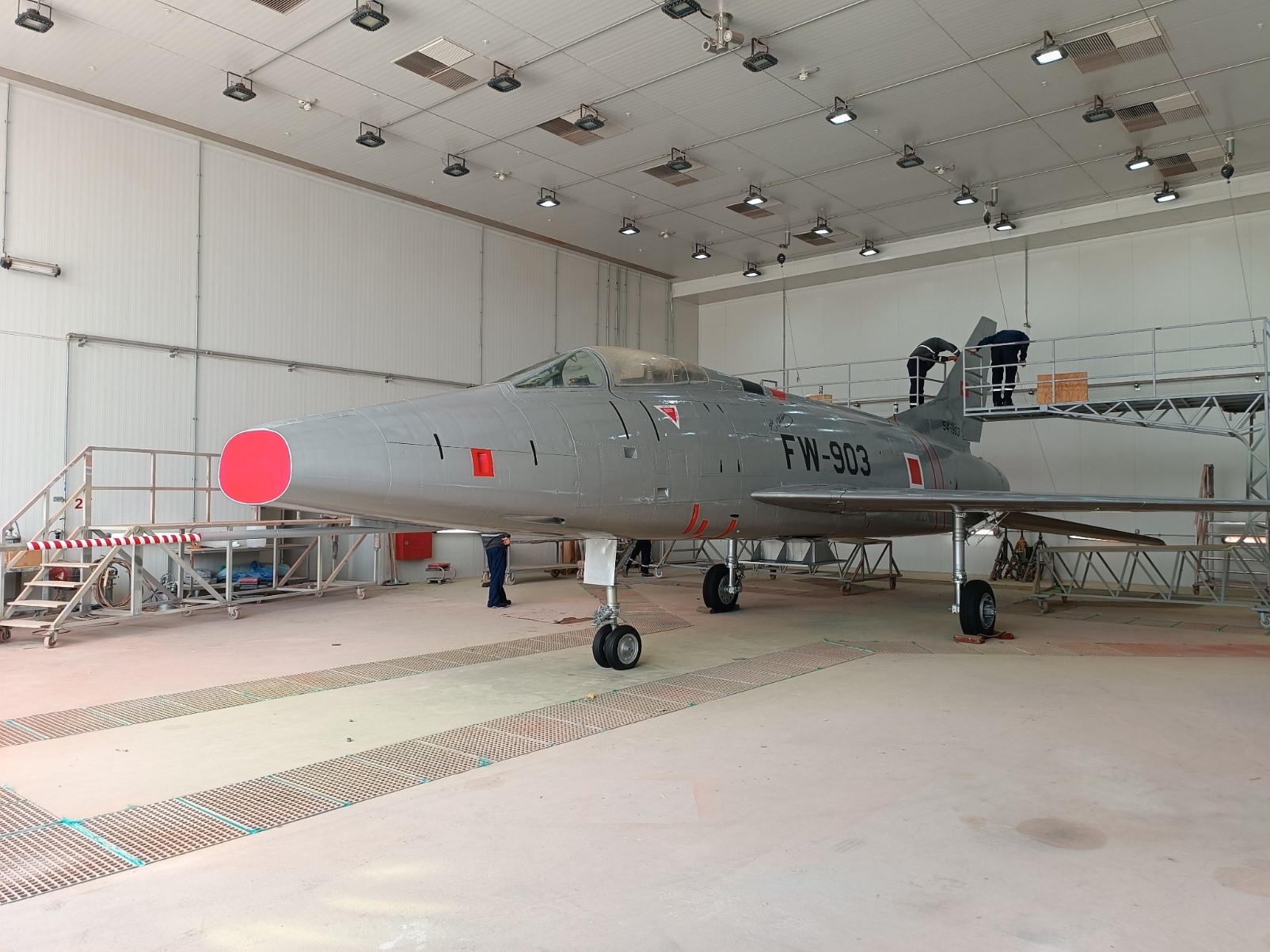
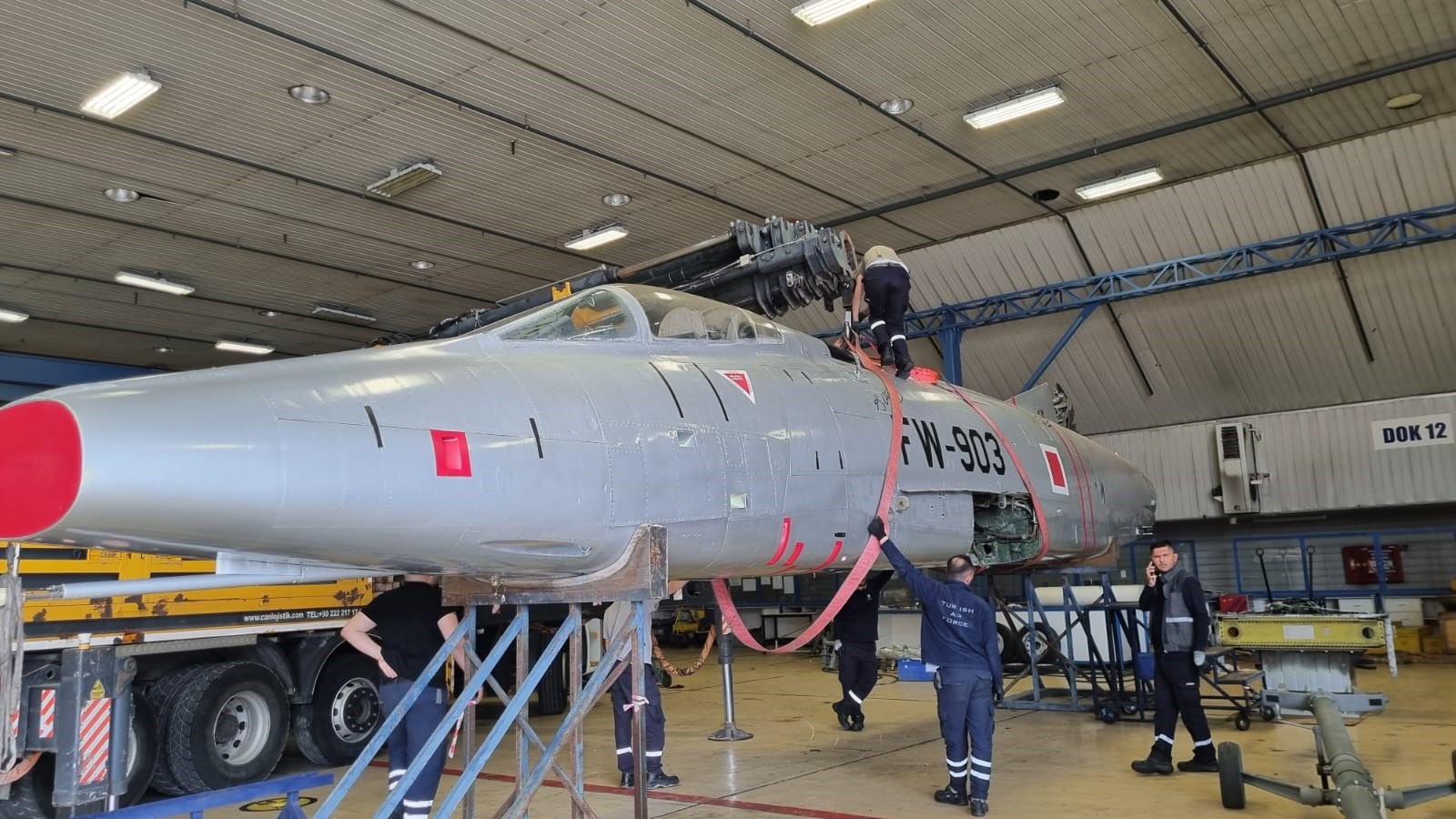
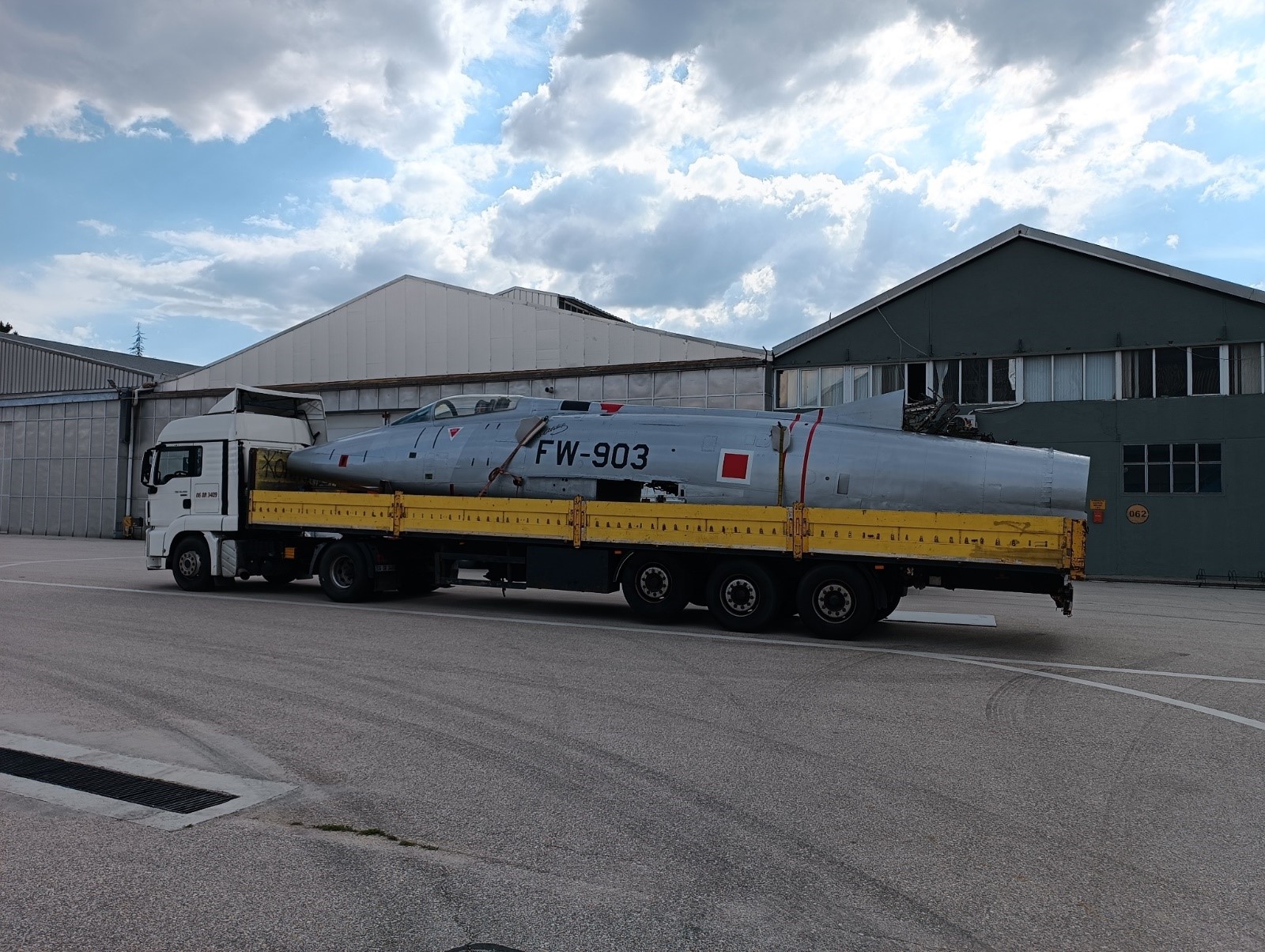
F-100 Super Sabre (Super Sword) is a fighter-bomber developed by North American and based on the design of F-86 Sabre, with the first prototype flight on 25 May 1953.
F-100C
F-100D
F-100F (Two-seater training aircraft)
The models produced in this configuration were used in the Turkish Air Force.
The F-100C configuration was introduced into the Turkish Air Force inventory in 1972, following the D and F models.
Turkish F100 aircraft were used extensively and effectively in the 1974 Happy Peace Operation.
General features:
- Crew: 1
- Length: 50 ft (15 m)
- Wing span: 38 ft 9 in (11,81 m)
- Height:16 ft 2,75 in (4,9467 m)
- Wing area: 400 ft2 (37 m2)
- Aperture ratio: 3,76
- Empty weight: 21.000 lb (9.525 kg)
- Gross weight: 28.847 lb (13.085 kg)
- Maximum take-off weight: 34.832 lb (15.800 kg)
- Power supply: 1 × Pratt & Whitney J57-P-21/21A afterburner turbojet engine
Performance:
- Maximum speed: 924 mph (1,487 km/h, 803 kn)
- Maximum speed: Mach 1,4
- Range: 1,995 mi (3,211 km, 1,734 nmi)
- Maximum altitude: 50,000 ft (15,000 m)
- Climb rate: 22,400 ft/min (114 m/s)
- Transport-drag ratio: 13,9
- Wing load: 72,1 lb/ft2 (352 kg/m2)
Ammunition:
- Weapons: 4× 20 mm (0,787 in) M39A1 revolver cannon, with 200 rounds per gun
- Hardpoint: With a capacity of 7,040 lb (3,190 kg), it can carry combinations of the following:
- Missiles:
- 4× AIM-9 Sidewinder or
- 2× AGM-12 Bullpup or
- 2 or 4× Mk 4/Mk 40 2.75" (70 mm) unguided rocket launcher
- Bombs: Convectional bomb or Mark 7, Mk 28, Mk 38 or Mk 43 nuclear bombs
The acts of violence and terrorism against the Turks in Cyprus, which started at Christmas 1963, increased again in August 1964. Attacks on Erenköy and Mansura started on 05 August 1964, especially after Greece landed 9.000 fully equipped and heavily armed soldiers and 950 officers on the island to support the Greeks. The UN Peacekeeping Force in Cyprus was unable to prevent these attacks which were carried out with the aim of blockading the Turks in the region, cutting off all their connections and isolating them, and only protested the attacks on 07 August 1964 when the Turkish positions began to fall. Upon the order given by the General Staff at 11.00 on 07 August 1964 to conduct reconnaissance over Cyprus and to be prepared for a possible air attack, the first of the reconnaissance scouts of the 1st Main Jet Base Command reached Cyprus at 15.05 and the second at 18.30 to conduct reconnaissance. As a result of the reconnaissance, the F-100 aircraft waiting at the 1st Main Jet Base Command took off for Cyprus and made four warning passes over a transport ship and 5-6 landing ships and returned to their bases in Türkiye. As the Greek Cypriot attacks continued despite the warning flights of the Turkish jets, an air operation was carried out on 08 August 1964 limited with a force of 34 aircraft. During the operation, 14 sorties of reconnaissance flights were carried out and 20 sorties were flown by Turkish jets at 17.30 when the Greek Cypriot attacks on Erenköy continued. During the air operation, Greek Cypriot supply points, ships and troops in Erenköy and Gemikonağı regions were targeted, five Greek freighters and one Greek fast boat were sunk and 70 pick-up trucks carrying reinforcements to Greek Cypriot positions were destroyed. During the air operation, Air Pilot Captain Cengiz TOPEL, whose plane was hit by the fire opened by the Greeks, managed to jump out of the plane and land on the territory of Cyprus with his parachute. However, Captain Cengiz TOPEL, who was captured by the Greeks, was tortured and martyred by the Greeks. On 09 August 1964, Greek Cypriot targets in Dillirga, Alevköy and Lefkoşa were bombed with 14 aircraft from 181st Squadron, 9 aircraft from 183rd Squadron, 11 aircraft from 113th Squadron and 12 aircraft from 193rd Squadron. On 10 August 1964, it was decided that F-104 G aircraft of the Air Force would patrol off the coast of Cyprus and F-86 aircraft would be kept ready for air defense operations. After the arrival of the United Nations military force to the island, Türkiye announced the suspension of the operation upon the Greek Cypriots' announcement that they would lift the blockade. As a result of the incidents that occurred after the Greeks did not give up the idea of enosis despite Türkiye's air operation, Turkish planes flew low over Cyprus on 18 November 1967 and gave a warning. On the morning of 15 July 1974, forces belonging to the Greek National Guard Army staged a military coup and announced the establishment of the Hellenic Republic of Cyprus. Upon receiving the news that the coup had begun, the National Security Council convened in Türkiye and made a statement in which it was emphasized that this was a Greek intervention, that the order on the island had been destroyed, that an illegitimate military administration had been established and that Türkiye considered this as a violation of the agreements and guarantees. After all diplomatic attempts made by Türkiye following the military coup on the island proved fruitless, Türkiye decided to use its authority to intervene in order to fulfill its obligations under the Treaty of Guarantee and to bring peace not only to the Turkish Cypriots but also to the Greek Cypriots on the island. Air Force Command participated in the First Cyprus Peace Operation which was carried out between 20-22 July 1974 with; - Air Transport Group Command (C-47), 221st Squadron Command (C-160) and 222nd Squadron Command (C-130) from the 12th Air Transport Main Base Command, -111th and 112th Squadron Commands (F-100 C/D/F) from the 1st Main Jet Base Command, -131st and 132nd Squadron Commands (F-100 C) from the 3rd Main Jet Base Command, -141st Squadron Command (F-104 G) from the 4th Main Jet Base Command, -152nd Squadron Command (F-5) from the 5th Main Jet Base Command, -171st and 172nd Squadron Commands (F-100 D/F) from the 7th Main Jet Base Command, -181st (F-100 C/F) and 184th Squadron Commands (RF-84 F) from the 8th Main Jet Base Command, -191st Squadron Command (F-104) from the 9th Main Jet Base Command participated in the operation. Within the scope of the operation, the Squadrons operated under the command and administration of the 2nd Tactical Air Force Command, and the squadrons to participate in the operation moved to İncirlik, Balıkesir, Antalya, Sivrihisar and Mürted as their new airfields as of 19 July 1974. The Cyprus Peace Operation, which was conducted as an amphibious operation, started on 20 July 1974 at 04.49 local time with the reconnaissance mission of the Air Force elements. In order to soften and pre-shape the landing and deployment zones, fighter jets of the 131st, 132nd, 171st, 172nd and 181st Squadrons carried out offensive air operations in the first sortie against the Greek Cypriot targets previously identified in the Beşparmak Mountains. Following the offensive air operation, Air Force aircraft and helicopters launched an airborne operation in the Boğaz and Ortaköy regions, and the Airborne Brigade and Bolu Commando Brigade successfully carried out a raiding airborne operation. In the first sortie, 19 C-47 and 17 C-130 and C-160 aircraft were used in the airdrop mission. During this mission, one C-47 aircraft, damaged by flak fire from the ground, returned safely to Kayseri, while another aircraft made a forced landing at Silifke. The C-47 aircraft assigned for the airdrop operation carried out the parachute battalion dropping mission, while the C-130 and C-160 aircraft carried out the heavy equipment airdrop mission in addition to this mission. The transport aircraft and helicopters performing airdrop operations were protected by F-5 fighter jets of the 152nd Squadron Command. During the operation, the 12th Air Transport Main Base Command carried 132 sorties of material and personnel. On the second day of the operation, Air Pilot Major Fehmi Ercan, who was serving as the Forward Air Controller, was martyred. In an environment where the Cyprus Peace Operation was progressing successfully, intensive efforts were made by the US and the UN to ensure a ceasefire, and as a result of diplomatic contacts, a ceasefire was agreed at 17.00 on 22 July 1974. Following the inconclusive outcome of the "Peace Talks" in Geneva, the Second Cyprus Peace Operation started at 04.30 on 14 August 1974 with the offense of the land elements from the east, and Turkish troops advanced in two sections towards Gazimağusa at 06.30 and Lefke in the west. On the morning of 14 August 1974, fighter jets of the Turkish Air Force struck Greek Cypriot positions between 06.00 and 06.25. In addition, the aircraft of the Turkish Air Force provided close air support to the land elements carrying out the operation and contributed to the successful execution of the operation. The Second Cyprus Peace Operation ended at 19.00 on the evening of 16 August 1974, when Türkiye accepted the ceasefire in compliance with the decisions of the UN Security Council. During the Cyprus Peace Operation, the Air Forces Command carried out close air support, isolation, reconnaissance, offense, protection and airborne missions. During the Cyprus Peace Operation, a total of 1,030 sorties were flown by the Air Forces Command, of which 819 sorties were flown in the first phase and 211 in the second phase. During the operation, Air Force personnel Air Pilot Major Fehmi ERCAN, Air Pilot Lieutenant İlker KARTER, Air Controller Sergeant Major Sami EMEN were martyred.
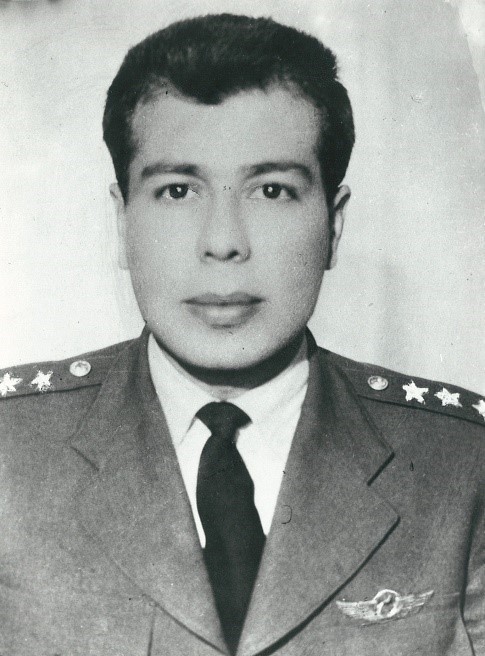
Martyr Pilot Captain Cengiz TOPEL (1955-H-19)
Cengiz TOPEL was born in İzmit in 1934. He completed his primary education in Kadıköy in 1946, his secondary education in Yeldeğirmeni in 1949, his high school education at Kuleli Military High School in 1953 and in 1955 he graduated from the Military Academy as a 3rd lieutenant which he started in 1953. On 28 February 1956 he was promoted to 2nd lieutenant, on 30 August 1958 to lieutenant and on 30 August 1962 to captain. He was assigned to Canada for pilot training between 1955-1957, to the Air Training Command between 1957-1958, to the 4th Air Base Command (Merzifon) between 1958-1961, and to the 1st Air Base Command as of 1961. On 08 August 1964, while serving at the 1st Air Base Command, he participated in the air operation to Cyprus and even though he jumped with a parachute when his F-100F aircraft was hit, he was captured by the Greek Cypriots and martyred.
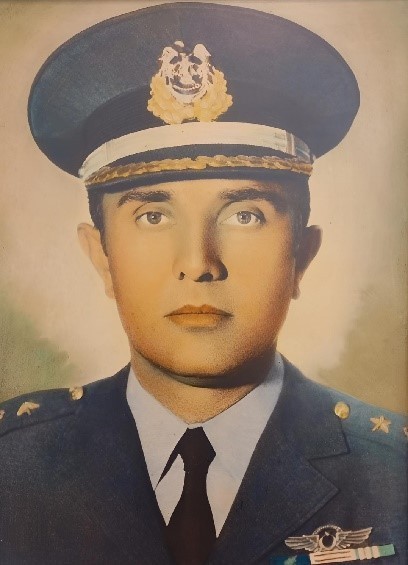
Martyr Pilot Major Fehmi ERCAN (1959-H-56)
Fehmi ERCAN was born on 24 June 1935 in Balıkesir. He completed primary school in Demirci, secondary school in Gönen and high school in Balıkesir. On 15 November 1957, he entered the Air Force Academy and joined the Air Force as a 3rd lieutenant on 30 August 1959. Following his pilot training, he was assigned to the 3rd Main Jet Base Command on 13 October 1964. He completed the T-37 instructor course in this unit and worked as an instructor until 13 September 1968. During the same period, he attended a nine-month English course in İzmir Güzelyalı. From 07 September 1968 to 06 June 1973, he served as a reconnaissance pilot in the 3rd Air Force 184th Squadron. During this period, he served as an ACT officer in the Cyprus Turkish Regiment between 25 February 1971 and 24 February 1972. On 08 June 1973, he joined the 2nd Main Jet Base Command. With the order given by the Air Force Command, he joined the Cyprus Turkish Unit and participated in the operation. Air.Plt.Maj. Fehmi ERCAN was martyred on 20 July 1974 while serving as a forward air controller in Cyprus during the conflicts.
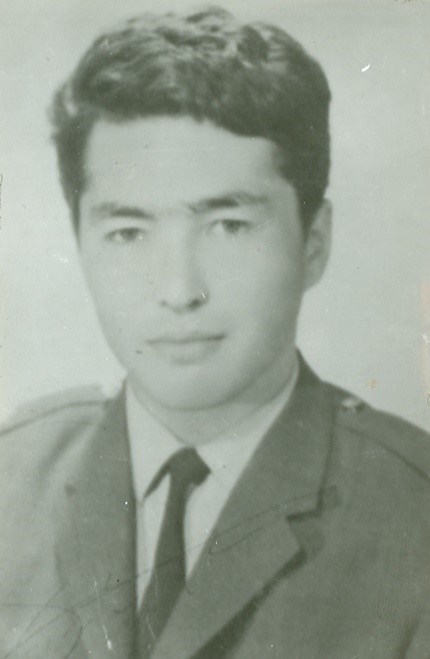
Martyr Pilot Lieutenant İlker KARTER (1964-H-138)
İlker KARTER was born in Eskişehir in 1943. He completed his primary and secondary education in Eskişehir and his high school education at İzmir Military Air High School. In 1962, he entered the Air Force Academy and graduated as a 3rd lieutenant in 1964. On 28 February 1965, he was promoted to 2nd lieutenant and on 30 August 1965, he was promoted to lieutenant. Air.Plt.Lt. İlker KARTER was on duty at the 8th Main Jet Base Command on 20 July 1974, while conducting a mission flight with his RF-84F aircraft in the Cyprus Peace Operation, his aircraft was hit by enemy flak fire, and he was martyred after falling in the Deregeçit area of Cyprus.
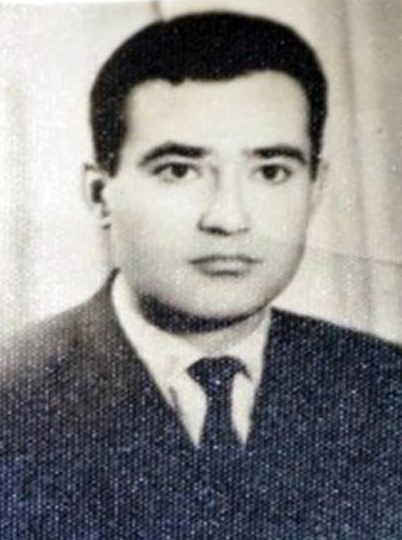
Air Controller Sergeant Major Sami EMEN (1959-L-19)
Sami EMEN was born on 12 February 1940 in Eceabat-Çanakkale. He completed his primary and secondary education in Eceabat and graduated from the Non-Commissioned Officer Candidate Preparation School which he entered in 1957 as a sergeant in 1959. He was promoted to staff sergeant on 30 August 1962, master sergeant on 30 August 1965, first sergeant on 30 August 1967 and sergeant major on 30 August 1970. As of 30 August 1973, he was assigned to the Cyprus-Timbu Airfield Command. On 29 October 1974, he was martyred in the line of duty.